Tuesday, June 4, 2013

Demonstration Plots - June 4, 2013


Everyone is encouraged to come to the Master Gardener demonstration plots and see what’s growing.  The demonstration plots are a continuing community project of the Rutgers Master Gardeners of Burlington County, developed to demonstrate, test, teach, learn and enjoy gardening in its many forms in New Jersey's unique climate and soils.  Volunteers maintain the gardens throughout the year using the practices and techniques learned in the Rutgers Master Gardening Training Course and continuing education programs. If you see a “work party” in progress, please stop by and talk to our volunteers. They’ll be happy to show you the gardens and answer your questions.

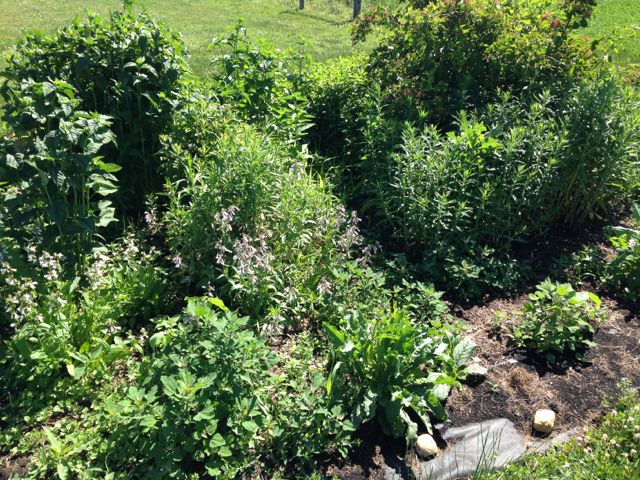
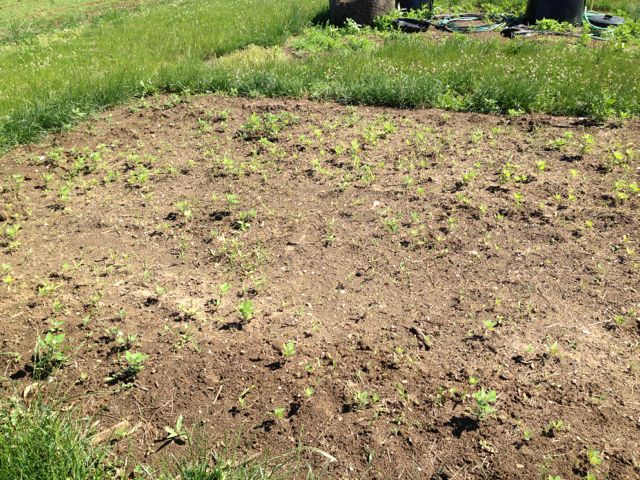
Here are the latest photographs of the demonstration plots. 

Herb Plot

Pollinator Plot


Hops Plot

Blueberry Plot

Active Composting Plot

Cover Crop Plot

Quinoa Plot

Virginia Peanut Plot

Tomato Plot

Pepper Plot


Sunday, June 2, 2013

IPM notes for May 30th, 2013


Trap report from Lise:
  • Trap 1 (for Black Cutworm): one black cutworm
  • Trap 2 (for Corn Ear Worm): 4 black cutworm (juvenile)
  • Trap 3 (for European Corn Borer): one corn borer
  • Trap4 (for Fall Army Worm): one true armyworm.

Opened our day with a discussion of soil pH. It is a logarithmic scale used to measure acidity of the soil. It ranges from 0 to 14 with 7 being neutral. Logarithmic means that for every change of 1 on the scale there is a change of 10 times in the amount. 0 – 6.9 is acidic and 7.1 – 14 is basic. General agricultural/gardening optimal pH is 6.2 to 6.5 with some plants such as blueberries preferring more acidic soil. Remember that when amending soil with lime to bring down the acidity “Lime Takes Time” – up to 6 months to achieve the full benefit and change. General discussion determined that this should be in a ‘reminder binder’ at the help desk when we are asked to interpret soil test results.

As we walked, we identified the following:

  • Sedge (triangular stock and corms on the roots)
  • Lambs Quarters
  • Jimson Weed
  • Velvet Leaf
  • Wild Geranium
  • Annual Bluegrass

Corn Field
  • Corn is in the 2 collar stage or 2nd leaf stage
  • Cereal leaf beetle is causing some leaf pane-ing
  • There is some environmental damage to the leaves due to heat and moisture.
  • Found some evidence of ‘buggy whipping’ – the main leaf remaining tightly furled. Can clip the top to help it to open up.
  • We examined the inside of a corn plant – where at this stage you can see all the leaves and even the silk that the plant will have in full maturity. Very beautiful.

Wheat Field
  • The wheat is starting to turn. Probably ready for harvest in another month.
  • We found Septoria tritici and Powdery Mildew. The mildew has slowed its growth in the heat.
  • Cereal leaf beetle continues.
  • Birds are swooping and feeding in the field.
  • Possible Rust beginning.
  • Flag leaves seem healthy enough to complete filling of the ears.
  • Ears are in the milk stage and almost finished forming.
  • We found head stalks clipped as in Army Worm damage at the edge of the field in one small area. We were unable to find the worms at the base of the plants. However, we did find one in the trap. This is a concern.
  • Because the crop is set the strategy is one of protection.

Soybean Field
  • Soybeans are not yet in the 1st trifoliate leafing.
  • We found an area at one corner of the field that looked very barren. Upon examination, it showed that the seeds had germinated, but the plants have been nipped.
  • First, we looked for slug evidence such as trails.
  • Then we discussed rabbits, groundhogs, and deer.
  • We have a groundhog burrow close by and deer have been seen in the alfalfa field.
  • Continue to monitor.

Demonstration Gardens

Tomatoes – stakes were brought to complete the trellis.

Peanuts – peanuts did not germinate, so plants were purchased and planted in the plot.

Quinoa – still not sure of germination since young plants resemble Lamb’s Quarters.  We think we have some Quinoa germinating.


A special thanks to Roger for compiling the notes from the week's IPM session.


Friday, May 24, 2013

BCCAC May 22nd Workday

Another successful Rutgers Master Gardener workday at the Burlington County Community Agricultural Center.  Crops have been planted in the demo plots and given tender loving care as demonstrated by our new irrigation system.  Stay tuned as we monitor the plots and report on our progress.  Thank you to all the Master Gardeners who came out and made the day a success.


Sunday, May 19, 2013

Do you know about the Rutgers - Plant and Pest Advisory newsletter?

This week I received an update from the Plant & Pest Advisory and was reminded of the usefulness of the information.  For those of you unfamiliar with it, the Plant & Pest Advisory shares concise, timely, seasonal management information that has been used to sustain New Jersey's commercial growers for over 40 years. The articles focus such varied topics as insects, disease, and weed management for fruit, vegetable crops, field and forage crops, ornamentals and turf.  While the advisories are meant for commercial operators, they also can provide useful information to community gardeners and home gardeners. The information comes directly from Rutgers research and extension facilities to subscribers.   Emerging issues in nutrient management, farm food safety, crop insurance and risk management education, and disease forecasting using NEWA (Network for Environment and Weather Applications) can also be found within the pages of the Plant & Pest Advisory newsletter.  For the most recent post or to subscribe, please visit the link:  http://plant-pest-advisory.rutgers.edu/ .

Additional Information

Network for Environment and Weather Applications - Cornell University


Thursday, May 16, 2013

May 9th IPM Session at BCCAC

One of the most import tasks we completed during our last IPM session was the setting of the insect traps.  Insect traps can be divided into two categories: passive and active.  Passive traps do not use a lure to attract insects. Examples of passive traps are sticky traps, pit-fall traps and water traps.  Active traps use a lure of some kind, such as color, food, light and pheromones.  The traps we set this week were active traps that use pheromones. 

What is a pheromone? Pheromones are chemicals released into the environment in small amounts through special glands in the insects.  Pheromones are species specific and may stimulate one gender or all genders.  Male moths can detect pheromones using their antennae.

A pheromone trap at BCCAC
The pheromone traps we set are for:
  • Cutworms
  • Corn Earworms
  • European Corn Borer
  • Fall Armyworm
Each week we will examine the traps and record our observations.   Our observations will be shared in this blog and used by the farmer in making pest control decisions.


Setting a pheromone trap
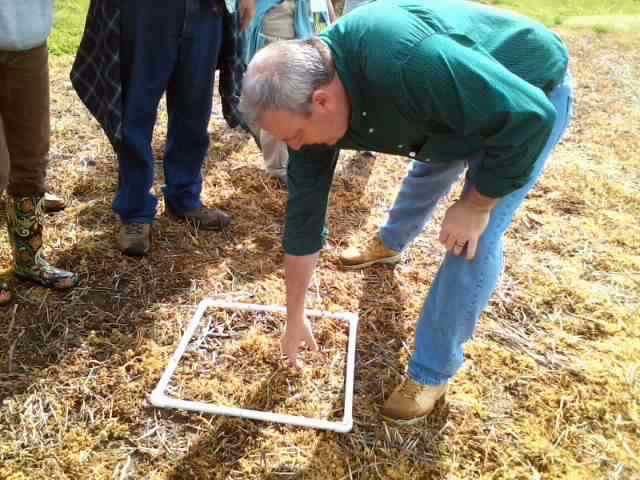
Bill Bamka, Rutgers County Agricultural Agent demonstrates the use of a square for measuring thresholds
Another important segment of our session was devoted to the discussion of thresholds.  For IPM,  the threshold is the level that a pest population must reach before some action must be taken.

Types of Thresholds
  • Economic Thresholds
  • Damage Thresholds
  • Economic Injury Thresholds
  • Aesthetic Thresholds 
Thresholds can vary throughout the season.  Thresholds are constantly revised as the crop reaches different development stages, as new pests appear and as the commodity prices change.  As the season progresses we will be reporting on the thresholds of the crops were are monitoring.

Using a square to evaluate ground cover

Additional Information

Antennae used to detect pheromones, find mates: moths

Insect Traps and Barriers - Cornell University

Economic thresholds - Texas A&M


Thursday, May 9, 2013

Pest of the Week - Cereal Leaf Beetle

The pest of the week is the Cereal Leaf Beetle(Oulema melanopus Coleoptera: Chrysomelidae). Before we talk about the Cereal Leaf Beetle, let us take a look at the beetle family.  Beetles are the most common type of insect.  Beetles are everywhere.  But beetles can be confused with other kinds of insects, especially some true bugs.  So how do you recognize a beetle?

First look for the wings and wing covers.  Most insects have wings, and those that do have two pairs.  Beetles differ from all other winged insects by having the first pair of wings hardened and thickened.  These hard forewings serve as a protective shield for the fragile flying wings, which are folded underneath. The Latin name for this order, Coleoptera, means “folded wing”.  Wing covers in beetles meet in a straight line down the middle of the back  

The Cereal Leaf Beetle adult is about 1/4 inch long with a bright orange thorax and blueish metallic head and wing covers.

Adult Cereal Leaf Beetle 


The first sign of Cereal Leaf Beetle activity in the spring is adult feeding damage on the plant foliage. Adult injury to the plant is characterized by elongated, slender slits in the upper leaf surface.


Damaged wheat leaves and larvae (Purdue University)
While this is the first sign of infestation, it is Cereal Leaf Beetle larvae that are the target of control. Eggs and larvae are monitored by inspecting individual plants.  Thresholds are expressed as egg and larval numbers per plant or per stem.
The boot stage is a critical point in wheat plant development.  When the flag leaf emerges, feeding is generally restricted to the flag leaf. Damage to this leaf can significantly reduce grain yield and quality.  At the boot stage, the threshold is one larvae or more per flag leaf.
The Feekes scale of wheat development

Lady beetles prey on Cereal Leaf Beetle larvae. Several imported parasitic insects attack Cereal Leaf beetles.  The parasites imported from overseas and established in some areas of the U.S. include Anaphes flavipes, a wasp that parasitizes Cereal Leaf Beetle eggs


Additional Information

Bug Club Identification Key - University of Florida

InsectID: Beetles - UW-Madison

Cereal Leaf Beetle Biology and Management - Virginia Tech

Growth Stages of Wheat - Texas A&M Extension

Growth and development guide for spring wheat - University of Minnesota